Burnin' it up
Wow, that was fast.
I kinda new it had been a while since I posted. No shortage of things to say, just... Well, y'know... Time.
But still staggering to look at the date of the last post and find that over two weeks have passed.
Anyway, just a temporary lapse. One of many, sure, but anyway I'm back. Once again a busy week at Lake Wobegon. There was Thanksgiving, of course, and it was one of the good ones. Won't go into that, though. In addition, I've met with several people, gone to another EWB-SFP meeting, where they had a great presentation by their Appropriate Technology Design Team (ATDT), including a great presentation by Ken on the Darfur Cookstove project.
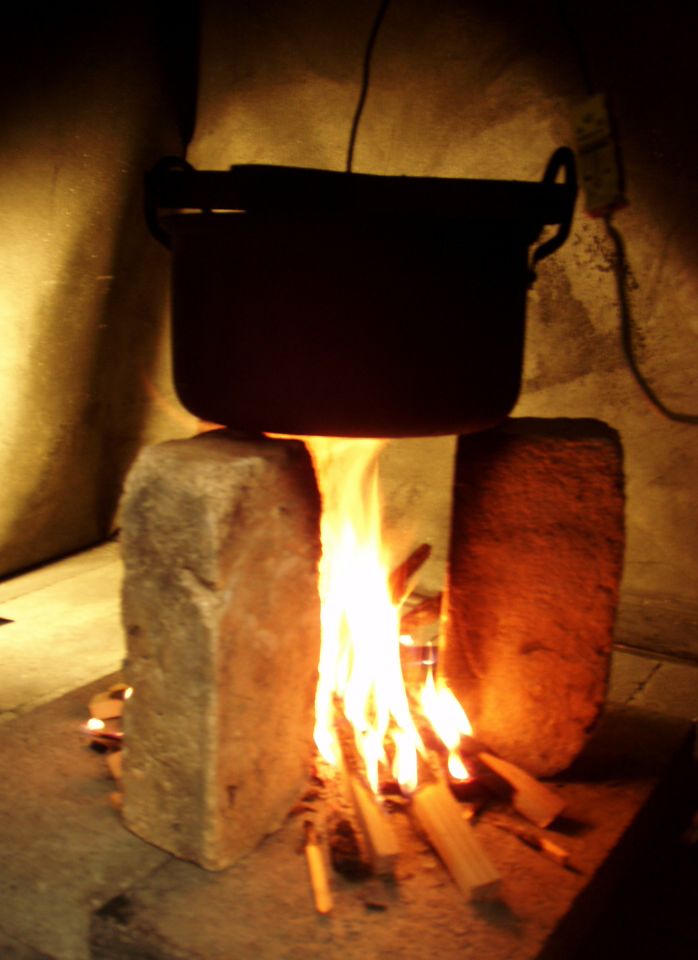
That one was particularly educational. Here are the highlights. There are about 2.2 million "IDP's" (internally displaced persons, considered distinct from refugees) in Darfur. Nearly all of them cook using the traditional "3 rock stove" technique (see photo, from ATDT Aprovecho blog post), which does not make very efficient use of fuel (i.e. firewood). Food is supplied by international aid. Fuel is supplied by gathering for nearby...except that over time the local area has been denuded of wood, and so now "nearby" means a 7 hour round trip to collect wood. Women and children perform the gathering, under threat of rape or mutilation. It's worse if men do it; the likelihood of murder is quite high. So there is value in reducing the need for collecting firewood. Solar cookers have been developed, but unfortunately the nature of the cookers does not allow for cooking of the traditional meals, and so the IDP's, desparate for a vestige of their lost lives, revert to the cooking they know, and the solar cookers have not been adopted.
ATDT got involved. They took a look at some existing FES's (fuel efficient stoves, yes it even gets its own acronym!) and found that, like the solar cookers, you could not cook the traditional meals. They also were very sensitive to wind, which tends to blow at around 6 mph in Darfur. They also wanted to develop a design for a stove that could be manufacture at a reasonable cost in Darfur itself! (It's hard, but there are lots of benefits to this.) So they made some tweaks and improvements, and have a version that looks very promising, using 1/4 of the fuel of the tradition scheme. This can make a huge difference, especially if the stoves can be made locally. Currently 50 proto stoves are undergoing testing by IDP's on site in Darfur. (Amazingly, this and other aid efforts have been hampered by travel restrictions imposed by the government in Khartoum. Apparently Nicholas Kristof's articles do not exagerate.)
Much of this (including some cool photos) is captured in the ATDT stove test blog post (this is a different post from the one referenced above). When I read this (ages ago), I noticed a comment that had been left. The comment poster essentially said "yeah, but what's this got to do with reality?" This was pretty much my reaction when I read the blog; I thought, well great, they've inched up efficiency another 3%, but airlifting 300,000 stoves to Darfur seems like the wrong priority of investment, and I figured solar cookers would make more sense. I was mistaken; everything was illuminated at the EWB-SFP meeting last week. I'm extremely impressed with the effort to engage the local IDP's in manufacturing, using materials and tools and skills available in Sudan. And there's more. They're even finding clever ways to fund this, such as a form of carbon credits, since the new stove reduce the amount of carbon released into the atmosphere by several tons over the life of the stove. Wow.
I also met with Marc, the director of The Clarence Foundation, which is doing some great work on giving circles, including a "traveling giving circle" which will make some decisions in Nairobi early next year (there's still room, I think). I'm very excited by that, and will be joining up in the new year. Also contacted Robin, who is working to improve the lives of villagers near Kilimanjaro via Hope Through Opportunity, as well as Natalie, who recently visited west Africa and wants to help make an impact on education there. Several people have been joining the effort at my favorite wiki, where page views have been skyrocketing, probably as a result of some promotional work, as well as some very successful porting efforts. (Plus, of course, it's just a damn great idea.) We've been porting (with permission, of course) some great material from the Erssons, Practical Action, International Rivers Network (along with American Rivers), and G.P.Baron of Philippine BioDigesters (really). Numerous other contributors are creating some original content as well.
And in the coming week I'm gonna be meeting with Doug, and John, and Ken and...
But I promise to write a post...though it could be a 2 liner. (Did I hear someone say "Is that a threat or a promise?")
Labels: Appropedia, appropriate technology, EWB, third world, village
posted by Curt Beckmann at 9:14 PM
1 comments